

It was a steamy Brisbane January, and everyone was talking about the bathtub scene. I sat down to watch the film that I had heard so much about, but my laughter and eye rolls did not seem to be a response shared too widely.
*This post discusses the film in its entirety, it is best to save it for later if you wish to avoid spoilers*
Don’t get me wrong, I can appreciate many aspects of the film that were expertly accomplished. The screen was dripping with grotesque luxury, balancing the desirable and the grotesque is no small feat! The attention to detail with costuming, location, lighting, sound, and cinematography certainly paid off. The performances were superb, each actor cast perfectly for their character. The performances were brimming with confidence, sensuality and the veneer of civility.
I am a huge fan of Emerald Fennell’s work, having loved her critical exploration of society in both Killing Eve and Promising Young Woman. I have been recommending Promising Young Woman as one of the best films of the 21st century for years. So I was deeply surprised to have such a strong negative response to Saltburn.
The film starts with promising and clear intent. The music nerd in me rejoiced as Barry Keoghan strode into Oxford University to the calls of “Long live the King” from Handel’s coronation anthem Zadok the Priest. It was clear that this character was here to seek power. And in the same violent manner as kings past, that is exactly what he did.
I was rapt as we watched the complications and challenges of establishing a new relationship unfold before me. The complications of money in social settings, exacerbated by the haves vs the have nots. The awkwardness of trying to become friends in a pre-existing social group. The long and winding deep-and-meaningfuls as you get to know someone well. All of these felt familiarly awkward and exciting.
Then we went to Saltburn and met the older generation. Richard E. Grant’s spectacular performance as the benevolent lord with controlling tendencies absolutely sparkled. But I was particularly captured by Rosamund Pike’s interplay with Carey Mulligan’s Poor Dear Pamela. Again, navigating a close relationship where the social dynamics are so skewed is fascinating. The two performances are spectacular with glances, faces and bodies betraying the insecurities and vulnerabilities of each character delicately.
My problem is not with the scripting, direction, aesthetics, soundtrack, or performances. No, it is with the plot.
We soon begin to see Oliver’s sinister sensuality. It seems nobody is safe from Oliver’s smoldering gaze, nor his social manipulations. The long-standing relationships of Saltburn crumble left and right. Fennell deliberately uses the Grotesque, with Oliver committing more and more vile and repulsive sensual acts. As an English Literature major, the Grotesque is familiar to me. However, I don’t understand its role in this film.
If this film was attempting to explore the underside, or dark side, of inherited power then why was the character without it the one performing the grotesque acts? If this film is about exploring the grotesque parts of humanity, then why don’t we get to interrogate Oliver’s motivations?
It feels like the Grotesque was used to sensationalise the film, so that everyone would watch it for the bathtub scene.
While the image of Barry Keoghan dancing naked through the halls to Murder on the Dancefloor is sure to live on as an icon for decades, the ending left me frustrated. Was this supposed to be a surprise unreliable narrator story? The “revelatory” flash-backs suggest that was the aim. But what was surprising? We knew he wanted power from the first scene. We had seen aspects of his social manipulation. His involvement in the deaths was clearly implied by proximity. Where was the surprise?
Maybe then it was supposed to be a villain story, but we don’t know anything about the villain. Why did he do what he did? What were his motivations? Could it really be just Jacob Elordi’s abs and eyelashes? No, this story doesn’t quite achieve that either.
So what was the point of the film?
The film finally closes with a few lingeringly iconic visuals. We are supposed to believe that he inherits Saltburn following a series of supposedly non-homicidal deaths. We watch Oliver sit on top of Elspeth and rip the ventilator tube from her trachea with a stunning visual flourish. No sane coroner could possibly pronounce that death as natural causes. It would take the police approximately five seconds to figure out who did it.
The film had lost me.
But then again, that naked dance would have quite a different feel with Oliver in handcuffs. And maybe audiences would like that even better, don’t you think Mr Grey?

Who among us hasn’t noticed the creep of nineties looks, sounds and smells over the past few years? I mean, who doesn’t love rocking out to Nirvana in a halter top and butterfly hairclips, smelling of the latest Impulse scent? But what is it that has drawn our attention back to this time of punk music vs boy bands?
Nostalgia is the easy response, and it makes sense. Workers in their 30s and 40s, people with disposable incomes, were tweens and teens in the 90s. Their bucks follow their interests, and it is easy to grab those dollars with a nostalgic 90s feel. Not to mention, Generation X are the parents of today’s tweens and teens. Surely every parent has experienced their teenager ‘finding’ the cool album/t-shirt/artwork that was in their house the whole time? So it makes sense that cultural moments follow those with the disposable income.
Teenagers quote Friends at school, wearing faux-vintage band t-shirts and coating themselves in fruity scents. Walking through a shopping centre, you are likely to run into a tween version of at least one Spice Girl. In so many ways, it is comforting, amusing, and familiar. Are there any downsides?
Revisiting media from previous decades can be so much fun. 20s flapper dresses, 50s cocktails, 70s hippies, 80s hair; we love a good dress up! The problem arises when we revisit that historical moment without critical thinking.
Those fun decades of wacky hairdos, glitzy outfits and awesome music had some messed-up ideas going on. Racism was not only accepted, it was enshrined in law. Young men were conscripted into the defensive forces against their will, women did not have equal anything, and a whole host of other ‘backwards’ ways dominated. And it is impossible to separate those ideas from the media of the time, because it is our media that simultaneously reflects and shapes culture.
Let’s look at an example.
Friends is a popular as ever, with the show finding new watchers every day. However, it is a show of its time in every way. In the golden age of sitcoms, Friends was the king of the one-liners and enduring sexual tension (they were on a break!). When looking back with nostalgia it is easy to skip past the gay-panic jokes, transphobic treatment of Chandler’s parent and complete lack of diversity. Set in New York City, a hub of immigration for hundreds of years, it is hard to believe that six young workers would have so few interactions with people from different cultural backgrounds. Even those characters portrayed by people of colour lacked any exploration of cultural difference. Ross, Joey and Chandler’s knee-jerk response to any sort of male affection or suggestion of male-male attraction accurately portrays the dominate attitude at the time of “Don’t ask, don’t tell”. Even Friends co-creator Marta Kauffman has since expressed regret for the treatment of Chandler’s trans parent.
As I have caught episodes over the years, these issues have become more and more jarring. I like to believe it is because our societal views have progressed (at least a little).
Enjoying media from the nineties is fantastic, I do and I hope you do too! The problem arises when we enjoy it uncritically. Friends was and is a fantastic TV show. It speaks to a lot of people around the world, entertaining and bringing joy; just like Seinfeld and Titanic and NSYNC and so many other phenomena from the decade of body glitter and oversized tracksuits. As we bring forward our beloved elements, we just need to remember; some of the nineties attitudes should be left back there.
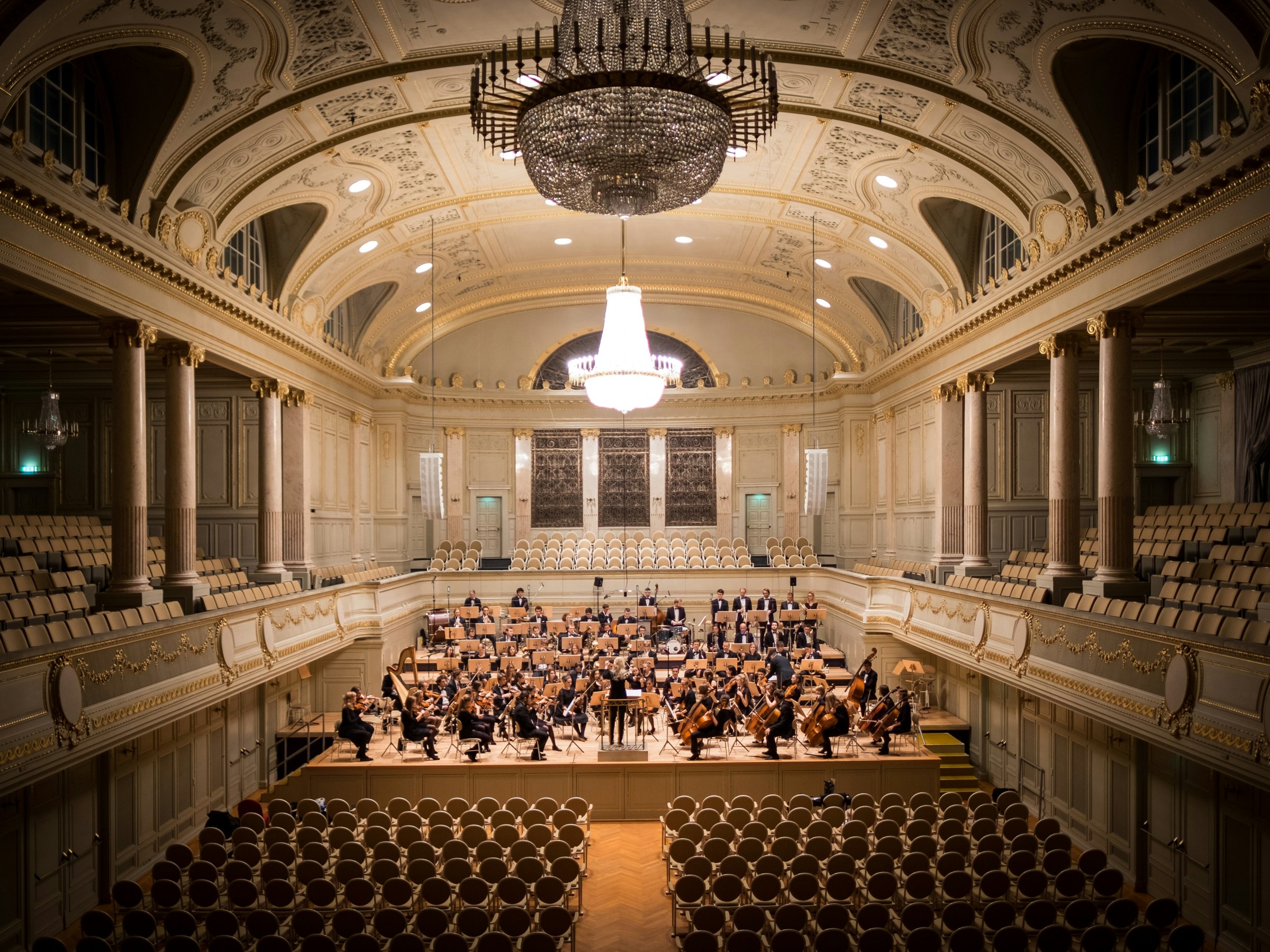
What is classical music these days? Is it the butt of jokes? The stuffy music confined within the walls of our conservatories? Concerts for the wealthy, old people to show off their frocks and jewels?
It’s easy to put classical music into a box contained by Beethoven. Mozart, Bach and Tchaikovsky. But simple explanations never tell the whole story. Classical is alive and well, so why do we keep pretending it is the all about dead white men?
We are afraid. Afraid to try the clearly classical concerts, albums and groups. Over the past few decades in education, what proportion of young people have been taught basic music literacy? Like everything in life, complex music can be more enjoyable (and less scary) when you know the basics. But our educational expectations are a rant for another day.
I can understand this fear, but it is irrational. Classical music already exists our lives in a variety of ways. From movies to gaming to TikToks it guide our emotions and helps us to make our point. Just two notes, and years of musical theory, creates a villain unseen in the depths of the water. The swell of strings prepares us for the imminent profession of love. Strident brass creates an evil march for our dark villain. Trying to run from it is futile.
Instead, we should branch out and attend a classical music concert every once in a while. If we don’t, then the world will continue to reduce classical music (and ticket sales) to dead white men.
But stepping into those hallowed halls of the concert halls still feels like a big ask. Some classical concerts are still steeped in tradition an unknown rules. What if you clap in the wrong place? Or misidentify a piece of music? What if you don’t know the major classical composers?
Here’s the big secret, the artists don’t care about the ‘faux pas’ as long as you are enjoying the music.
I recently participated in the chorus of a Puccini concert. While I am a fan of classical music, I have never been a fan of opera. However, listening to a fantastic orchestra with sublime soloists had my heart soaring with the romantic highs and skin prickling with the treachery of the villain. Taking a step outside of my comfort zone was amply rewarded. Then I started to notice the musical Easter Eggs, when referencing the ‘American ways’ Puccini used what was then an official song of the US Navy; The Star Spangled Banner. And this musical conversation moves forward. Listen to The Humming Chorus and you will hear echoes of Les Miserables’ show stopping Bring Him Home. Un bel di vedremo forms the basis for the opening of Love is a Many Splendored Thing. All of this from a concert that I would not have chosen to attend.
Music, like all of our other fields of knowledge and skill, is always informed by what came before. From the early religious and folk song, to the proliferation of polyphony, to the formation of orchestras onto the invention of electronic instruments and recordings; music continues to learn and grow. Without our musical history we don’t get Ella Fitzgerald, The Beatles or even Taylor Swift.
Have you ever heard a classical accordion? The Australian Chamber Orchestra’s show For the Love of Music brought that delight to me this week. And what a spectacular night it was! It was full of new experiences, with contemporary composers alongside the classics and arrangements of a huge variety of pieces to suit this stringed orchestra. Perhaps the greatest point of difference was the willingness of the ACO to open themselves up to vulnerability and invited Leigh Sales and Annabel Crabbe to ask them questions. It was a spectacular night, and again I experienced things that I might never have chosen for myself.
So I encourage you to step beyond the Harry Potter soundtracks and Zelda themes, as fantastic as they are! Take a chance on something new.
Photo by Manuel Nägeli on Unsplash
Everyone is aware that Barbenheimer had quite the moment last year – but earlier this month the Oscars showed us just how much it has not ended.
I have seen countless posts, articles, opinions recounting the events of the Oscars earlier this month; but few of them recognised the almost perfect recreation of the movie’s plot.
Barbie broke records. It vastly out-achieved all of the other 2023 films in every way. It set new records for non-franchise films, films by a female director and Warner Bros. films. Barbie saw people flocking to the cinemas in a way that they haven’t since COVID had racking up streaming subscriptions from the comfort of our own couch. All of this could lead you to believe that Barbie was a shallow money-grabbing film, indeed that is what The Academy seemed to believe. Was it? Let’s examine it a little closer.
It is a film that examines reality vs imaginary and finds a (somewhat) clear definition between the two. The Matrix did that in 1999 and won four Oscars. It asks and answers what mortality is and why it is valuable to us. When The Irishman did so, it was nominated for ten Oscars. It uses brilliant sets and cinematography to tell an epic story. Everything Everywhere All at Once delighted audiences with its genius use of sets, cinematography and special effects before taking home seven Oscars. Barbie won one Oscar.
Yet, here’s the pattern, Barbie was the most viewed, commented on and loved part of the night.
Ryan Gosling’s performance of I’m Just Ken is the most viewed clip of the night (with 11 million views just weeks after the show aired). Do you see the pattern?
Barbie is viewed as purely fun, entertainment. The Oscars audience were up out of their seats boogeying and singing along to Ryan’s fantastic performance – as they should have been, it was brilliant! How many of those audience members recognised the song’s context and meaning. It is the story of a male with a fragile sense of identity, and a big ego, throwing a tantrum upon ‘realising’ that he is not number one in everyone else’s life. Something that happens all too frequently – just google ‘nice guy’. Yet listeners seem to go beyond enjoying the song, aligning themselves with the message ‘I’m just Ken’. Is that really how you want to represent yourself?
And Ryan Gosling gets it. From his acceptance of the role via text to Greta (a picture of his daughters’ Ken facedown in the dirt next to a used piece of citrus) to his faux-rivalry Oscars skit with co-presenter Emily Blunt where he says that Oppenheimer was riding Barbie’s coattails all summer, Ryan Gosling has shown an exact recognition of Ken’s place in the film and the film’s place in the world.
Of course I’m Just Ken has twice the views as Billie Eilish’s What Was I Made For (the song that won the Oscar). It features the male character’s story. Of course Ryan Gosling (as Ken) was nominated for an Oscar but Margot Robbie (as Barbie) was not. The Academy was ready to nominate a doll, just not a female one. Of course Greta Gerwig was nominated for Best Director on Lady Bird, but not Barbie. In peak #MeToo, Lady Bird was produced by a minor production company and a only a moderate box-office success. The perfect combination for an Oscar nomination.
Hollywood is intimidated by successful women. When Titanic broke box-office records, helmed by Peter Jackson, it was nominated for and won both Best Film and Best Director. When Lord of the Rings broke those records anew, again helmed by Peter Jackson, the films were nominated for and won Best Film and Best Director.
Barbie is not a Marvel movie; focused on plot devices, stunts, limited dialogue and CGI (or is it AI these days?). Barbie explores the fundamentals of feminism and the patriarchy in a meaningful and entertaining way. Barbie herself was uniquely positioned, as a symbol of femininity for decades, to allow women around the world to reflect on their experiences as a woman. Greta and Margot saw this opportunity and executed it with finesse.
So the Oscars played out almost as if Greta Gerwig had scripted it along with the Barbie movie. The men of Barbie were celebrated while the women (excluding America Ferrera’s well-deserved nomination) were overlooked. Once again, women’s voices were registered but not heard. This was a movie unapologetically exploring the female frustration with patriarchy, but remembered for its patriarchal messages instead. The Oscars made that exceptionally clear.
Unsurprisingly, I don’t think I can say it any better than Gloria:
It is literally impossible to be a woman. You are so beautiful, and so smart, and it kills me that you don’t think you’re good enough. Like, we have to always be extraordinary, but somehow we’re always doing it wrong.
Language is important. Language means something, not just anything, but something specific. We seem to be moving more and more toward a culture of three to five word slogans. Of course a slogan has its place, but its place is never to be a simple summary of the complex world that we live in.
I was at an event recently where a motivational speaker made a lot of mistakes. I think that one of them was the phrase “don’t be a victim”, but others who attended the same event did not agree with me. And I see their point, however, I still think that they’re wrong.
You see, as I understand their point, there are plenty of people who are feeling hard-done-by when that’s not necessarily true. Or perhaps they are hard-done-by, but instead of trying to change their situation they are wallowing in self-pity or ‘using it as an excuse’. But did you notice what I did? I made this point, indeed a whole paragraph, without using the word victim.
I believe that there are parts of our language that need defending. Not because I believe that language is a static thing, but because I believe that language shapes culture. Perhaps even creates culture. Our only way to share ideas and understandings with others is language. Those ideas that we share are invariably influenced by the creativity and limitations of the language. I believe that the meaning of the word victim is one that needs to be defended.
Cambridge Dictionary defines victim as ” someone or something that has been hurt, damaged or killed or has suffered, either because of the actions of someone or something else, or because of illness or chance”. You may notice that according to this definition a victim is someone that has something happen to them – they do not do anything. That is my problem with the phrase “don’t be a victim” – it changes the very idea of the word victim. It implies that there is a choice.
Whether you are a victim of trauma or circumstance, the first step to moving on is admitting that something has happened to you. And there are so many people who have trouble doing that. We live in a nation with an epidemic of domestic violence. Women are so commonly sexually assaulted that it is accepted as part of every women’s life. In some areas children are exposed to violence so routinely that no one worries because the children have ‘seen it all before’. In all of these cycles of violence there is under-reporting, people stay and subject themselves to more suffering. There are excuses made, blame mis-assigned and no one recognises a victim. Indeed, it is often the victim themselves that does not recognise what is being done to them.
I can completely understand the need to discuss moving on, pushing passed the hard things and thriving in your life. However, for some people the first step on that path is actually to say “I’m a victim”. It absolves them of their self-blame. It allows them to recognise their suffering. It can help to break a cycle.
So please, let’s protect the word victim. It belongs to the people who need it.
Ah, the Personal Computer – commonly held to be the biggest advance in technology since the wheel (or perhaps the internal combustion engine). A tool which has brought people together in a way that we haven’t seen before. And set them apart.
I am talking about the words that we choose, words typed hastily into a keyboard that would never spill hastily from our mouths. ‘Keyboard Warriors’ is a term bandied about a bit, but using the term warrior gives the idea that they are fighting for a cause, displaying loyalty and following orders. Most often they are not. They are fighting for themselves, from a place of fear or hate. Because the thing is, in a world of words why draw on weapons of fighting instead of the purpose-made tools of rhetoric?
The term ‘Troll’ is fairly apt, this time conjuring ugly and isolated creatures who, according to Wikipedia, “are rarely helpful to human beings”. Trolls are certainly rarely helpful to our human race. They are harnessing their dark arts, splitting their soul into their various anonymous accounts and spitting out unforgivable curses. Of course, in this world the powers I am discussing are the powers of language. The power to intimidate, vilify, change perception and incite violence. The power to persuade people to hate in a way they have never hated before. The power to end lives.
We know that language has this power, we have seen it again and again. We have seen individuals targeting high-profile women; harassing, threatening and putting their lives in danger by finding and publishing personal details. We have seen leaders divide communities, clearly designating ‘us’ and ‘them’. We have seen the impact of cyberbullying on young (or not-so-young) people’s mental health – to devastating effect.
So what do we do? With a problem so complex, once again there is no simple answer. And I am nowhere near smart enough to try. But perhaps we can stop trying to undo what we have already started. Having witnessed the power of language over and over again, perhaps we can accept the need for PC language right now. Hopefully, one day, we will live in a world where everyone is able to show understanding and respect, but until we get to that world we might need to just accept some rules. It may seem pedantic or over-the-top to change your language patterns, even when you’re among friends, but language both demonstrates and shapes our thoughts. For thoughts do not exist without language. If you’re using the language then you’re having the thought.
So next time someone asks you to change your language, or raises an eyebrow at your joke, indulge in a moment of self-reflection. Are they being ‘too PC’, or do you really want to send those thoughts out into the world?
Warning – this post may contain spoilers for Veronica Mars, Orange is the New Black, Will and Grace and Jane the Virgin.
If you read my spoiler statement above then you have probably realised that I have a type of TV show. And yes, it may be stereotypical. But that doesn’t diminish my attachment, my love and my anger.
In this current climate of revivals and returns a lot of shows are writing new endings, rewriting endings and undoing endings. After all, when does the story end?
I was bemused a few years ago when Will and Grace exploded back onto our screens, claiming a version of ‘it was all a dream’. With their first finale episode spelling out a story that spanned a baby’s journey to college, in order for them to bring the show back they had to undo that. It seems that all you need to pull off a successful new story, all you have to do is ignore the old ending.
If bemused was Will and Grace, then touched was Jane the Virgin. Being a telenovela, we knew that it would end with the good characters getting their happy endings (and the bad characters, not). That didn’t stop the sincere glow of Gina Rodriguez and steamy hotness of Justin Baldoni bringing just the right amount of cheese. Through its five seasons they show brought the ridiculous to real-life with good writing and performances all around. And this was exactly how the final episode (chapter 100) ended, with ridiculousness, humour and so much love.
Touched was Jane the Virgin, blown away was Orange is the New Black. They found something in the last season that they hadn’t quite put their finger on. They absolutely nailed it. Introducing the ICE detention centre allowed them to tell the story of the disappearing ‘illegals’. But I could not get past the climax of the season, the inmate who has been told she’s dumb by everyone her entire life finally eking out a modicum of self-belief. And the system failing her. Let’s just say that the final two episodes had me crying. Not a single luminous tear tracking down my face, ugly, loud, snot-filled crying.
And that brings me to Veronica Mars and anger. Veronica Mars is the standout show on this list, it has been brought back not once but twice. It is also the show that I have the strongest connection to, family bonding time. I was part of the Kickstarter campaign that got the movie made, bringing it back a decade after it had been cancelled. I loved every moment of it. Even though the movie ruined her career and dragged her back into the muck, I could forgive it because of her strong relationships. Then they announced a new season. Imagine my surprise when that season dropped without warning on Stan – of course I binged the lot. And then vibrated with anger. Rob Thomas did that common TV trick, that annoying and heart-braking thing. He made everyone happy and then killed off a major character. I immediately felt that Rob Thomas had fallen into the trap of basically all TV writers, married women can’t be interesting (unless it’s a show about marriage). As Rob Thomas discussed wanting to make future seasons, “But I feel as though we are going to have a better shot of doing more and more Veronica Mars if our heroine does not have a boyfriend or a husband back home.” Because we can’t possibly watch a woman being a kick-ass detective if she has a husband at home.
Unsurprisingly, killing off the ‘epic’ love of Veronica’s life in an add-on scene unnecessary to the plot made me angry. And it’s not just me. Checking out the level-headed social places of Twitter and Tumblr, you will come across message after message of heartbreak and anger. I think that the disassociated nature of this ending added to the feelings of loss and anger. It just did not feel necessary.
Endings are important. They’re important whether they are final, temporary or about to be undone. There are only a few milestones in our lives where we have control over our own endings. The rest of them take us by surprise, or slip by without being noticed. When we’ve invested time, energy and even money in a story then the ending has to fit. It must be necessary.

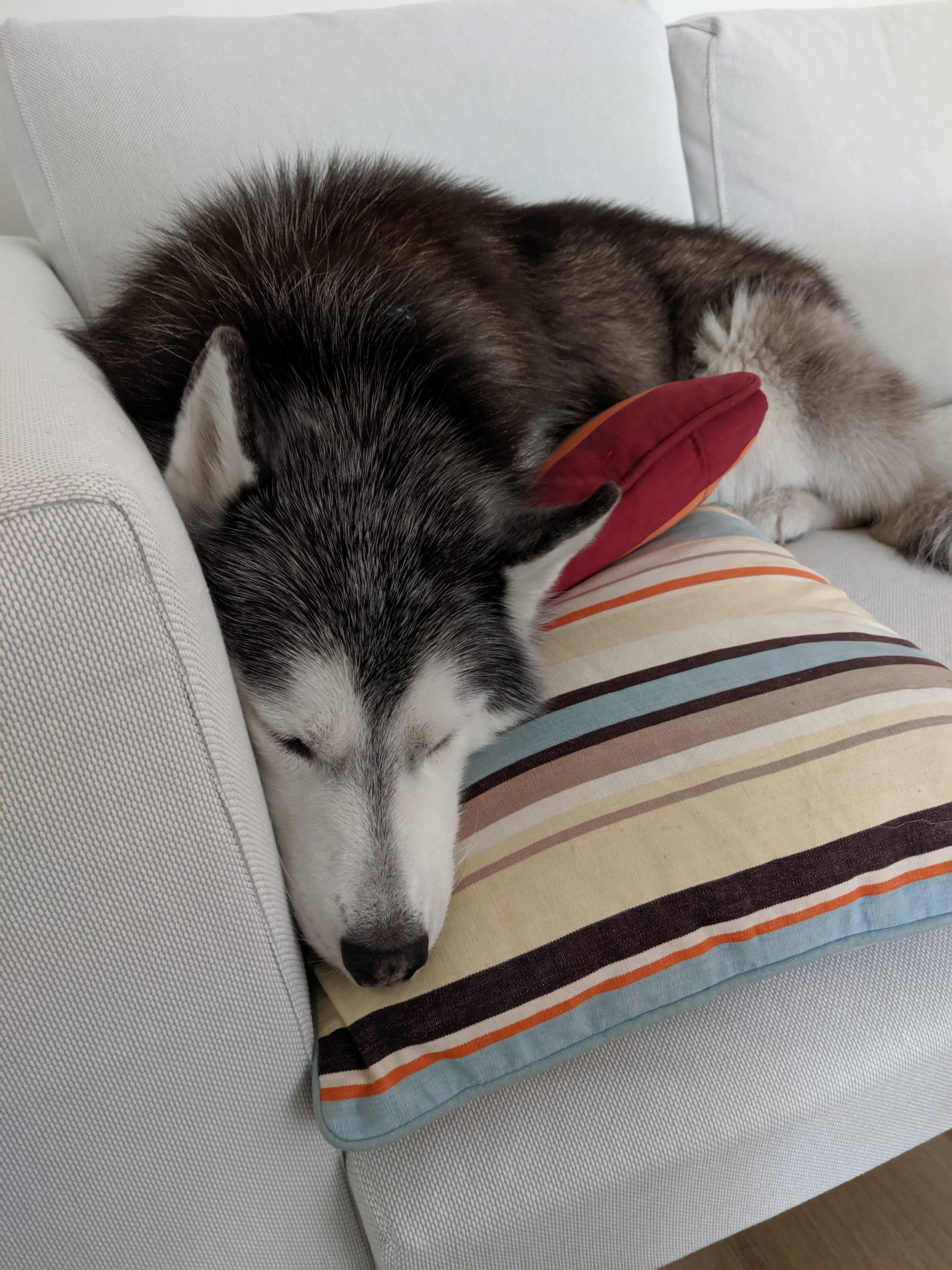
I have one of those dogs, a ‘fad’ dog. Now when we got our fluffy puppy, it was well before GoT put the Arctic Direwolves on the map. We didn’t have to contend with the hordes of obsessed fans, just the side-eye and questions of cruelty about having a Siberian Husky in Brisbane, Australia (in case you asked, they thrive in the climate . . . but that’s another blog).

I love my husky, she is beautiful (and she knows it), she is funny (although she doesn’t always mean to be) and she is loving. However, she is hard work. She gets anxiety, paces, hunts possums, escapes and runs. Huskies are well-known for their independence. Unlike her older black Labrador sibling, there are times when not even the tastiest treat can convince her to do something she doesn’t want to do. And this is where the danger in fad pets lies.
People see the stories, they see the striking dog, the well-trained and loyal companion. They don’t see the hours of exercise and mental stimulation required every day. They don’t see the potential destruction performed by a large and powerful animal. They don’t see how this will take lifestyle changes and an enormous amount of time and money.
Pets are an investment, a costly investment, but one that pays off. You get companionship, cuddles, love, reminders to move your body and lots of laughter. But they are an added complication. How do you incorporate your pet’s care every day? What do you do with your pet when you go away? If you pet becomes ill or injured, how much money will you spend to make it well? These questions are so rarely answered before families obtain a fad pet.
Families need to act responsibly before they take responsibility. Research the breed before you commit. Investigate costs in food and healthcare. Make decisions about how your lifestyle will incorporate the needs of your pet. If you do not have experience in handling large dogs, perhaps don’t start with one of the most difficult breeds to care for.
If you are considering taking on a pet I implore you to research, read and talk to experts. Excellent rescue organisations (such as SHAMROQ right here in Brisbane) can give you expert advice on that fluffy critter that you are considering taking home.

We’ve all heard it – something weird is making a comeback. But now, living in a world with more new media every day than we’ve ever had before, we can’t seem to escape it. My question is why?
I’m particularly talking about movies, the juggernauts, the ones that are guaranteed to make an obscene amount of money at the box office. Each and every one piggybacking that economic success of a legacy. Some of them are forgivable – like Star Wars, a battler of a movie turned into a cult classic with budgets and stories that keep evolving. But some break my heart, to the point that I can’t even bring myself to watch.
I grew up in a golden age of Disney princess movies, the first movie that I saw in a cinema was Beauty and the Beast. And our parent gleefully shared their experiences of movies such as The Jungle Book, Lady and the Tramp and Mary Poppins. Such a timeless classic that I cannot bring myself to watch the new one. As talented as Emily Blunt is, she is not Julie Andrews. It is hardly her fault that Julie Andrews was so iconic in the original that certain audiences will have trouble seeing past that. My bigger hurdle is my understanding of the plot, that Michael’s children need saving from the same fate he faced as a child. Michael has forgotten. What does this plot say about Mary Poppins herself? It says that the struggles of adult life are going to get anyone down, and even Mary Poppins cannot have any lasting effect. That’s not what I want to believe about Mary Poppins.
Imagine my surprise when I watched the much-anticipated first clip release for the new Lion King. It was the Circle of Life, but it was a Circle of Life that I knew well. Shot for shot it was exactly the same as the scene that had so sparked my interest back when I was five years old. What is the point? To make money?
Of course studios aim to make money, they are businesses. The bigger problem is the audience’s complicity. Instead of taking a punt with their money and time audiences seek the known, certainty. So that’s where the studios put their money. There are still amazing creative, ground-breaking and beautiful movies being made – but they are drowned out by the big budgets. It’s hard to hear.
What’s the solution? I don’t really know. I will keep trying to put my money where my mouth is and support original and interesting work. But how do we live in a world that appreciates originality? That’s a bigger question.
Apathetic, entitled, lazy. How often do we hear Millennials described this way? This concept, this understanding, goes beyond cities, states and even nations. It seems that a solid shape has been given to young people today. It is not flattering. Take a look at this quote from mainstream media:
“The children now love luxury; they have bad manners, contempt for authority; they show disrespect for elders and love chatter in place of exercise. Children are now tyrants, not the servants of their households. They no longer rise when elders enter the room. They contradict their parents, chatter before company, gobble up dainties at the table, cross their legs, and tyrannize their teachers.”
But I didn’t mean today’s mainstream media, this quote is attributed to Socrates. There has been a blind spot for millennia, a blind spot that communities have when discussing their young people.
The term Millennial combines two generations, Generations Y and Z. According to Urban Dictionary, Generation Y is the generation born between 1980-1994, the children of the Baby Boomers. We grew up with Prince, Madonna, the Spice Girls and the Backstreet Boys. We can remember a childhood without computers in the home, with no internet. We can also remember yelling at our siblings to get off the phone so that we could use dial-up. We met Harry Potter when he was fresh-faced and heading off on his adventures at Hogwarts.
I want to add my voice to the voices of this generation, voices of people with a unique insight into the technological and societal changes of the last 30 years. I truly believe in the power of language. The power of language to change people’s minds. The power of language to influence ideas. The power of language to simply change someone’s mood. I hope to harness this power, as best I can; to present a take on the world as experienced by a thirty-ish year-old in Brisbane, Australia.
So, next time the media discusses ‘Millennials’ or ‘Generation Y’, think about this. Think about the idea, increasingly supported by data, that Millennials will be the first generation in over a century to experience less economic stability and growth than their parents. Think about the fact that this generation has grown into a global world – a world which the internet has brought together in a way we have never experienced before. Staring down the barrel of Climate Change, Generation Y is facing challenges — known and unknown — that no other generation has faced. Then maybe you can cut us a little slack.
 Gen Why Now